




Bronya Light Nord + NG
Created for application even at negative temperatures!
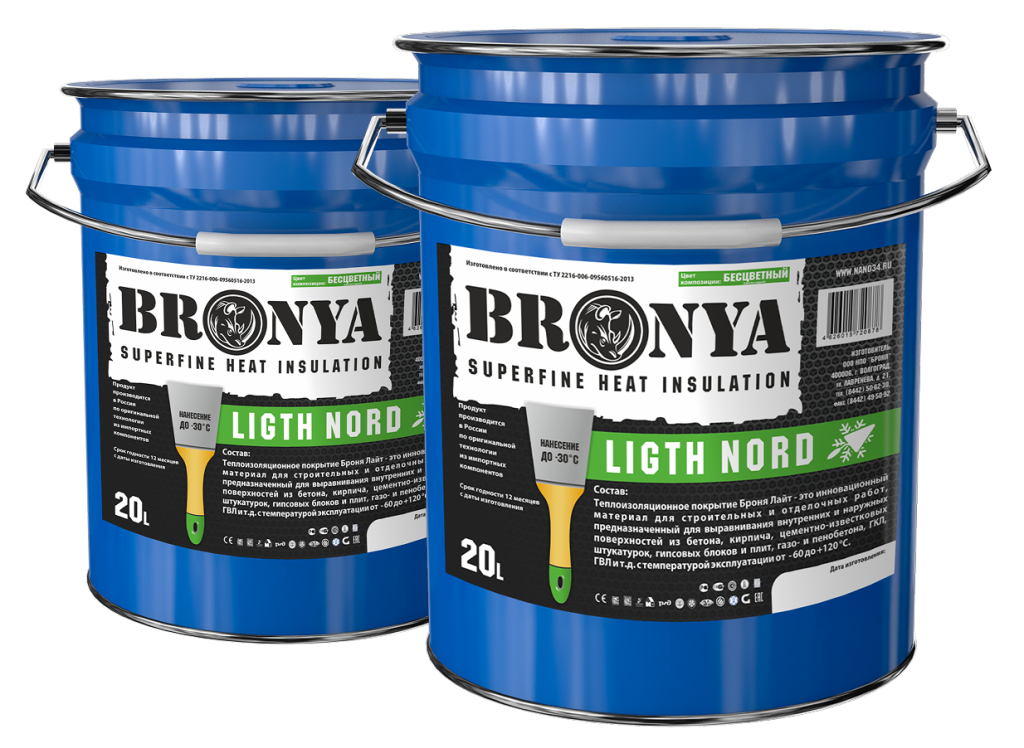
Liquid thermal insulation coating
Bronya Light Nord
Bronya Light Nord insulating coating is an innovative material for construction and finishing work. It is designed for the final leveling of interior and exterior surfaces made of concrete, brick, cement-lime plaster, gypsum blocks and panels, aerated concrete, drywall, and other surfaces at temperatures ranging from -60 °C to +150 °C.
Today's market offers a wide range of materials that help with thermal insulation tasks. One of them is aerogel, or so-called “nanogel.” It is a thermal insulation material with a very low thermal conductivity index that approaches zero due to significantly reduced convection.
Main properties of aerogel:
- Light
- Resistant to temperature differences
- Stable at high temperatures
- High strength
- Very low thermal conductivity
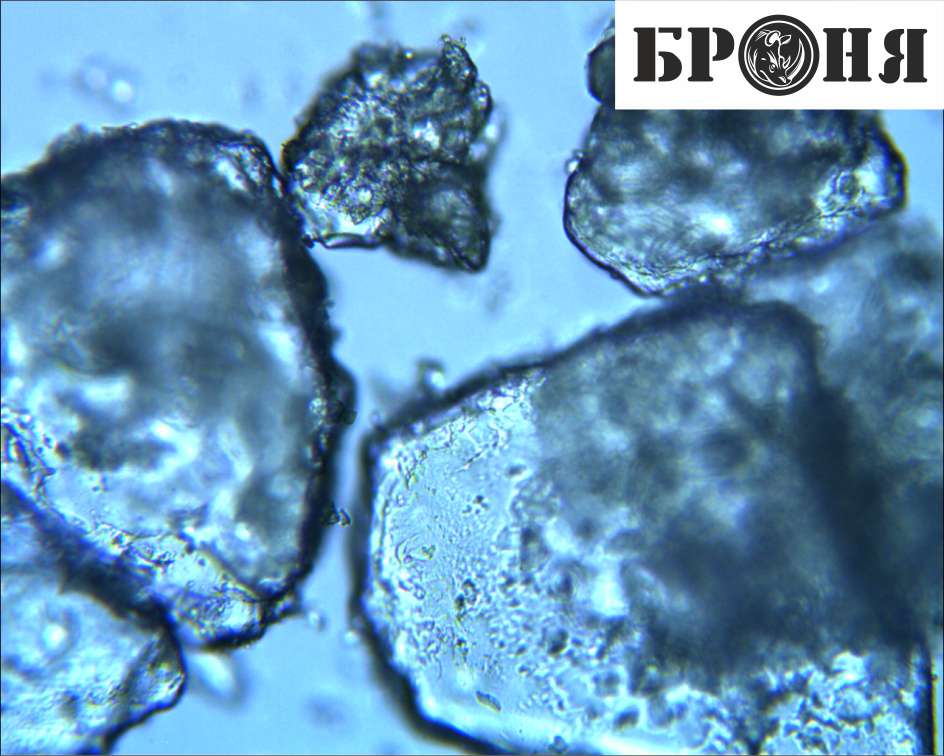
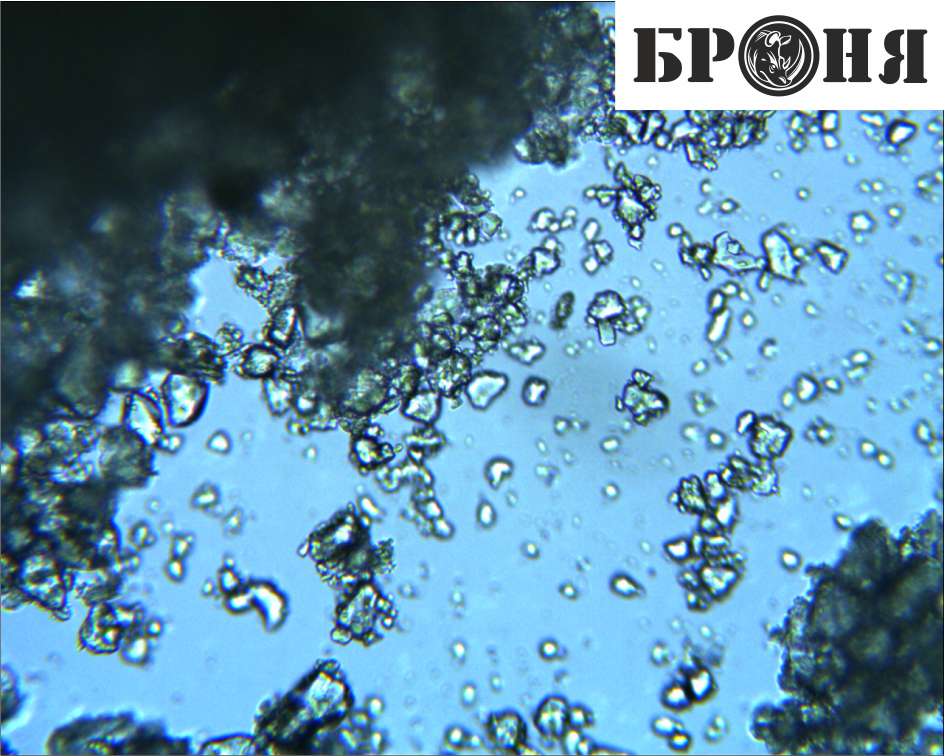
Nanogel powder is the basis for modifying the thermophysical properties in the Bronya Light Nord thermal insulation coating – under an electron microscope
This is perhaps the best thermal insulation material: lightweight, quite quick, resistant to rust and mold, non-combustible, and certainly does not sink. Aerogel can drastically reduce heat loss during the use of buildings and structures or, conversely, reduce the operating costs of air conditioning and refrigeration systems.
It is quite a challenge to develop a thermal insulation material that, while retaining the set of positive properties of aerogel, would be practical and easy to use in real-world applications and would meet all prescribed requirements for thermal insulation materials. That's why aerogel hasn't been popular until recently.
It is also interesting that aerogel has almost never been used for its intended purpose. Until recently, thermal insulation materials based on aerogel were so expensive that materials like polyurethane foam, mineral wool, and others simply couldn't compete with them. They were also quite bulky and cumbersome to use.
The progress of the chemical industry over the past decades has been enormous and has enabled the production of aerogels, especially when this nanogel is produced in powder form. As a result, building material manufacturers can now afford to use aerogels as an ingredient in the form of a so-called “nanogel powder.”.
The uniqueness of Bronya Light Nord thermal insulation coating It lies in retaining all the positive properties of the nanogel, while at the same time expanding and supplementing its range of application and functional capabilities.
Packaging and Modifications
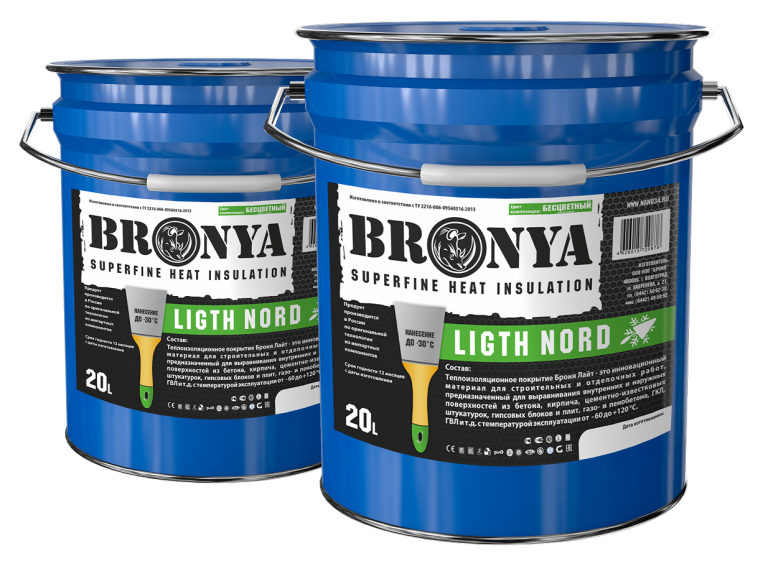
Available in 20-liter packages.
There is also Non-flammable modification!
The 20L plastic bucket of Bronya Light Nord thermal insulation coating weighs only 9.5 kg. During proper transport and storage, the micro-structure of Bronya liquid thermal insulation remains unchanged.
The outstanding features of the Bronya Light Nord modification, which distinguish it from other Brony modifications, are as follows:
- The thermophysical properties of a 2-3 mm layer of Bronya Light Nord material are identical to the properties of brick masonry 100-150 mm thick.
- The use of thermal insulation material is cost-effective (for solving additional winter insulation problems) compared to almost any other insulation, as the price of the Bronya Light Nord thermal insulation coating is comparable to the price of ordinary plasters.
- It can be used on surfaces that require light insulation (to eliminate the cold wall effect, frost penetration, and condensation formation during severe frosts), as well as in places where thermophysical properties would require less than 1 mm LCTI Bronye (Facade or Classic)
- It can be used for multi-layer coatings with the possibility of applying any building material over our thermal insulation coating.
- Works on filling and thermal insulation can be carried out simultaneously, which significantly reduces labor costs.
- The material can be applied using plaster spraying machines and high-pressure airless spray guns.
- The layer thickness can be up to 3 mm in a single pass.
- The layer will dry faster if the temperature is increased to 50-60 °C.
- The material can be mixed with a construction mixer at any speed
What couldn't be done before is now possible with Bronya Light Nord material!
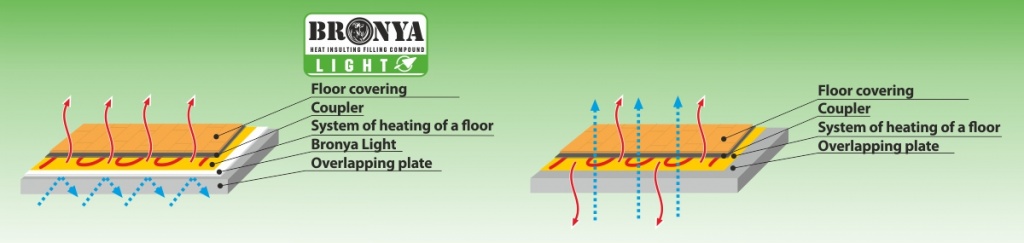
1. Floor insulation using the “underfloor heating” system”
Standard methods of installing underfloor heating require an insulator between the ceiling slab and the heating elements of the system, which significantly increases the thickness of the threshold. Now you don't have to use standard insulators that lose strength over time and shrink. Bronya Light Nord can provide better thermal insulation than any other material and significantly reduce the thickness of the heated floor covering.
Bronya Light Nord creates a thermal barrier that prevents frost from penetrating from the outside and reflects heat coming from the heating system.
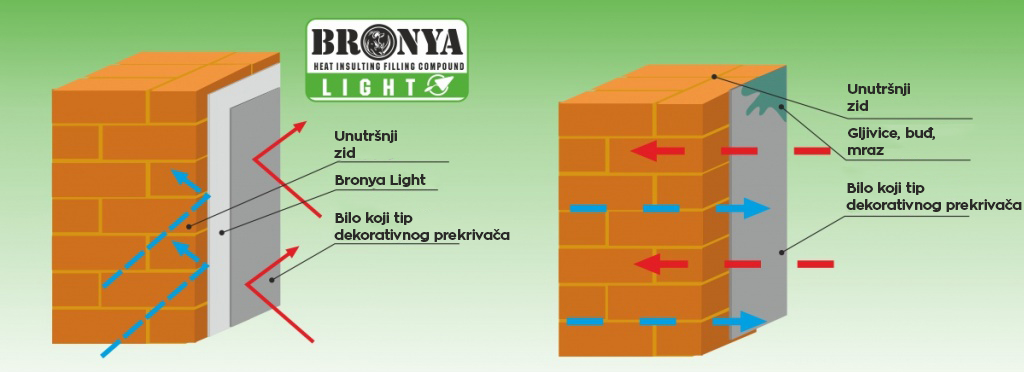
2. The walls will be insulated and plastered in one layer if Bronya Light Nord is used.
Wall insulation is a fairly complex and labor-intensive process that cannot always be carried out using conventional building materials, which are bulky and require additional labor costs for installation. Bronya Light Nord thermal insulation mass can be finished with any decorative materials such as wallpaper, paint, decorative plaster, tile adhesive, etc.
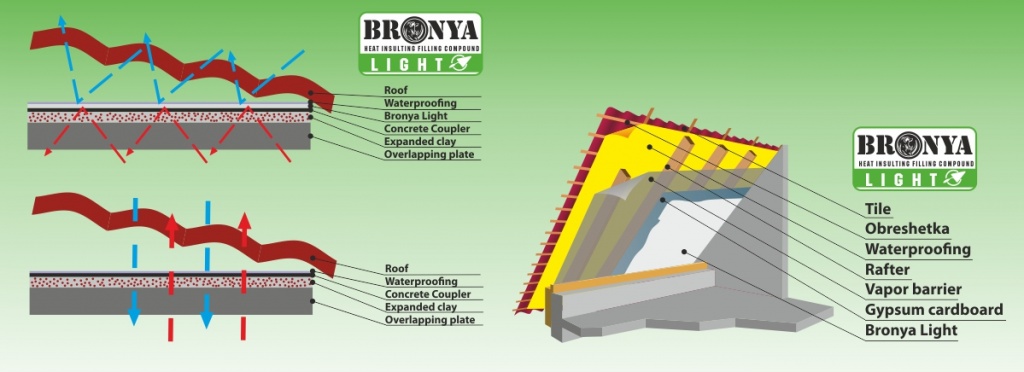
3. Roof Insulation
Bronya Light Nord allows for roof insulation with materials that do not add weight to the structure, while simultaneously creating a thermal barrier from the external environment. Therefore, there is no heat loss, no formation of internal ice, condensation, or icicles during the cold season, and heating in the warm season is significantly reduced.
|
Bronya Light Nord Application Area
|
Advantages and effectiveness
|
|---|---|
|
Thermal insulation of building facades during construction, reconstruction, and renovation
|
- Significant reduction in heat loss
- Elimination of thermal bridging - Possibility of performing plastering and thermal insulation works simultaneously - Protection of building envelope structures from adverse conditions and structural damage - Protection of building envelope structures from temperature drops - Reduction of capital and operating costs during facade renovation works, extension of the time period between renovations |
|
Thermal insulation of interior surfaces of enclosing structures of residential and industrial buildings
|
- Significant reduction in heat loss
Preventing wall freezing Prevention of condensation and mold - Preserving the room's usable floor space - Possibility of applying any decorative layer over thermal insulation - Reduction of labor costs and time required for work compared to other methods |
|
Thermal insulation of building roofs, metal roofs of sheds and garages, attic floors
|
- Significant reduction in heat loss
- Preventing interior overheating - Reduced air conditioning costs - Prevention of frost penetration and condensation formation within the roof No additional load on the structure - Elimination of ice stalactite formation - Reduction of labor costs and working hours |
|
Thermal insulation of window and door openings, recessed and standard balconies, protruding parts of steel and concrete structures, and finishes of monolithic slabs.
|
- Significant reduction in heat loss
- Thermal bridge elimination - Preventing condensation - Reduced labor costs and working hours compared to other methods |
|
Inter-panel connections
|
- Possibility of carrying out work in plants that are already in operation
- Removal of the heat bypass |